What Can You Use to Descale a Coffee Machine – Alternative Solutions

Coffee machines require regular maintenance to ensure they brew your favorite beverages effectively. If you’re looking for alternative solutions to descale your coffee machine, you have several options beyond commercial descalers. Natural ingredients like vinegar and citric acid can effectively remove mineral buildup without the harsh chemicals found in many store-bought products. However, be cautious, as using the wrong substances can damage your machine. In this post, we’ll explore these alternatives so you can keep your coffee maker in top condition while enjoying a delicious cup every time.
Key Takeaways:
- Vinegar is a popular natural option for descaling, effectively removing mineral buildup in coffee machines.
- Citric acid is another alternative that can be used, offering a biodegradable option for descaling that is also effective and safe.
- Baking soda mixed with water can serve as a gentle abrasive cleaner, which can help in removing scale buildup when used properly.
- Commercial descaling solutions are available, specifically designed for coffee machines, and often contain ingredients that are safe for internal components.
- Regular maintenance, including descaling every few months, keeps coffee machines running efficiently and can enhance the flavor of brewed coffee.
Nature’s Descalers: The Power of Citric Acid
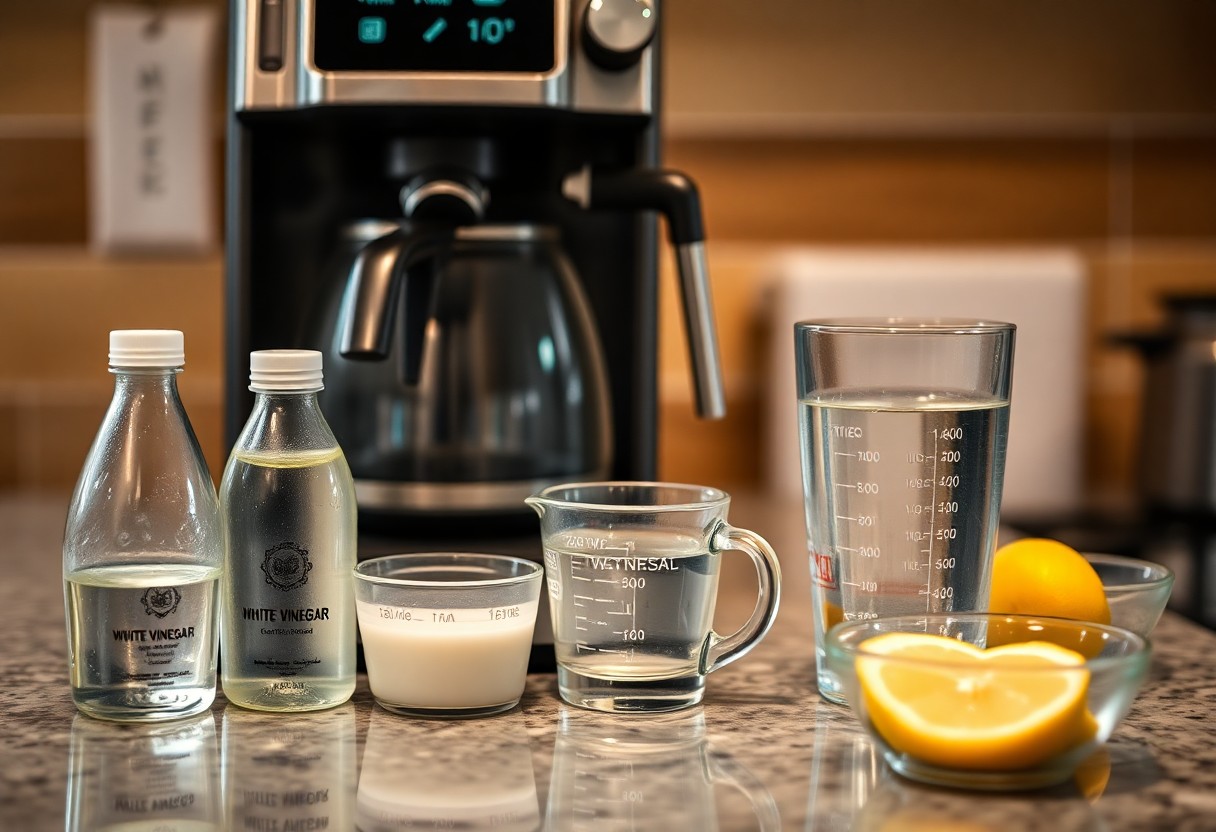
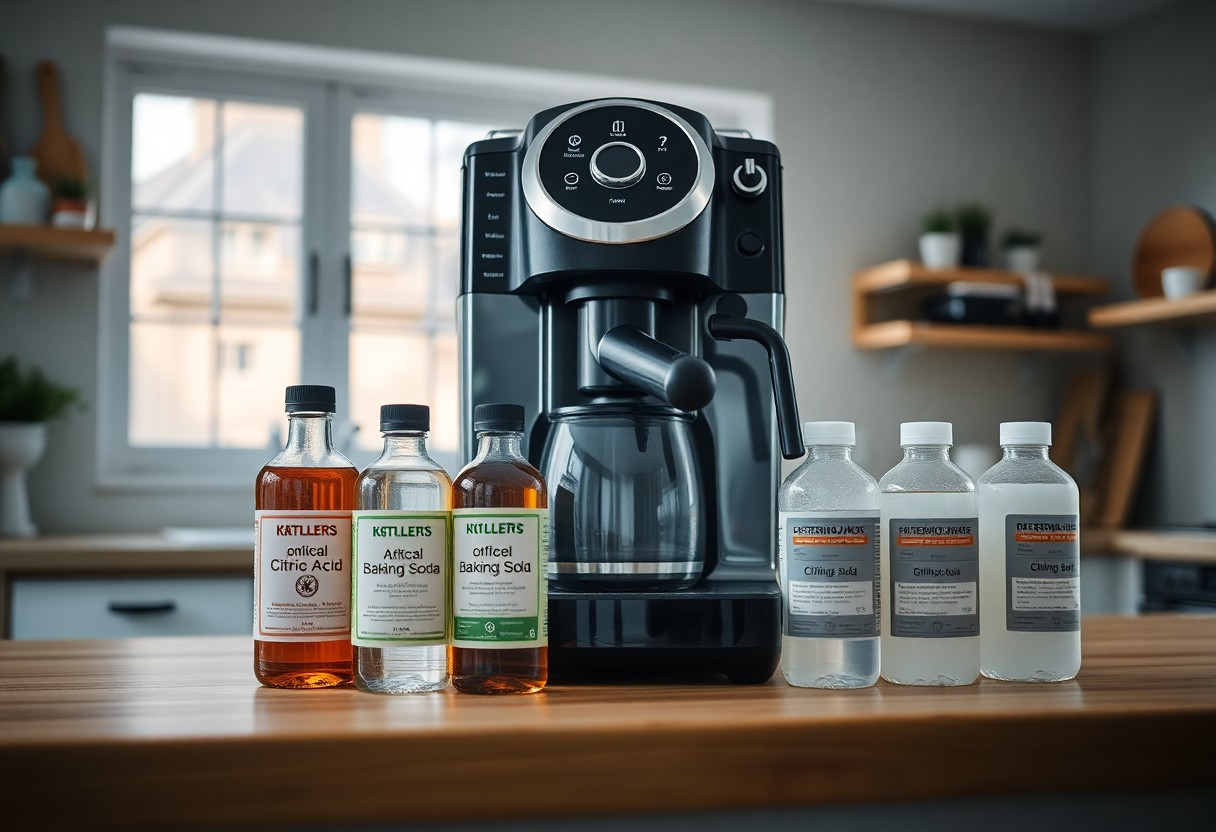
Using citric acid as a natural descaler for your coffee machine offers an eco-friendly alternative that efficiently tackles limescale buildup. This organic compound, primarily found in citrus fruits like lemons and limes, works effectively in breaking down mineral deposits while imparting a fresh scent. Moreover, citric acid is non-toxic and safe for your coffee machine, making it an excellent choice for those who prioritize both performance and environmental considerations.
Understanding Citric Acid’s Efficacy
Citric acid is known for its high acidity, which allows it to dissolve mineral deposits often left behind by hard water, such as calcium and magnesium. Its effectiveness in descaling becomes evident as it reacts with these minerals, transforming them into soluble compounds that can be easily rinsed out. This not only enhances your coffee machine’s performance but also boosts the flavor profile of your beverages, ensuring each cup is as good as the last.
Step-by-Step Guide for Safe Usage
Using citric acid is straightforward and safe, ensuring your coffee machine remains in prime condition. Follow these simple steps to effectively descale:
| Step | Details |
|---|---|
| 1 | Prepare a solution by mixing ≤ 1-2 tablespoons of citric acid with 1 liter of water. |
| 2 | Pour the solution into the water reservoir of your coffee machine. |
| 3 | Run a brewing cycle without coffee grounds, allowing the solution to flow through. |
| 4 | Rinse the reservoir and run 2-3 cycles with clean water to eliminate any citric acid residue. |
This simple four-step method not only cleans your machine but also extends its lifespan. You’ll want to make sure that the citric acid is fully dissolved in the water before pouring it into the machine, as this maximizes its descaling capabilities. A thorough rinse with fresh water is imperative after usage to remove any lingering taste, preserving the rich flavor of your next coffee brew.
| Tips for Effective Descaling | Examples |
|---|---|
| Use distilled water | Helps minimize future limescale buildup. |
| Descale regularly | Every 1-2 months, depending on water hardness. |
The Vinegar Debate: Is White Vinegar Worth It?
White vinegar is a staple in many households, often touted as a natural solution for descaling coffee machines. However, its efficacy can be a mixed bag. While it’s affordable and easy to find, some argue that its strong smell can be off-putting and linger in the machine even after rinsing. Evaluating its overall value depends on your priorities—cost, effectiveness, or convenience.
Pros and Cons of Using Vinegar
| Pros | Cons |
|---|---|
| Cost-effective solution | Strong, lingering odor |
| Natural and non-toxic | May not be effective on heavy buildup |
| Readily available | Can cause corrosion if used too frequently |
| Easy to use | Doesn’t eliminate all mineral deposits |
| Environmentally friendly | May require multiple rinses |
Alternative Vinegar Solutions for Different Coffee Machines
Your coffee machine might require specific descaling approaches based on its type and build. For machines with aluminum components, diluted vinegar (one-part vinegar to three-parts water) can be a safer option than straight vinegar, reducing potential corrosion. For high-end espresso machines, proprietary descaling solutions recommended by the manufacturer often yield better results while ensuring food-grade safety. Lastly, some single-serve machines may suggest using citric acid as a gentler alternative that avoids the vinegar smell altogether.
Baking Soda to the Rescue: An Unexpected Ally
Baking soda, a common kitchen ingredient, is not just for baking; it doubles as an effective descaler for your coffee machine. Its gentle abrasiveness and alkaline properties make it an ideal solution for tackling mineral buildup without the harshness of some commercial products. By incorporating baking soda into your cleaning routine, you can maintain your machine’s performance and enjoy a better cup of coffee with minimal effort.
How Baking Soda Works Against Mineral Buildup
The alkaline nature of baking soda (sodium bicarbonate) helps neutralize the acidity of mineral deposits, such as calcium and magnesium, commonly found in hard water. When dissolved in water, it creates a mildly abrasive solution that effectively loosens these deposits without damaging machine components. This combination makes it a practical choice for regular maintenance and descaling.
A Comprehensive Cleaning Method Using Baking Soda
For a thorough clean with baking soda, start by mixing one tablespoon of baking soda with a full water reservoir of your coffee machine. Run a brewing cycle without coffee grounds, and then follow with two cycles of plain water to flush out any residue. This method not only cleans the insides but also eliminates odors, leaving your coffee tasting fresh. Performing this every month can significantly extend the lifespan of your machine.
An effective cleaning method with baking soda is both simple and efficient. Start by mixing one tablespoon of baking soda in about four cups of warm water. Fill your coffee machine’s water reservoir with this solution and run a brewing cycle—this allows the baking soda to work its magic, breaking down mineral buildup as it flows through. Afterward, rinse the machine by running two additional cycles with fresh water to ensure there’s no residual taste. This not only removes buildup but also keeps your coffee machine in optimal condition, ensuring each cup tastes just as good as the last.
Commercial Descaling Agents: Are They Necessary?
Investing in a commercial descaling agent can seem tempting, especially with the plethora of options available. However, they often contain harsh chemicals that might not be necessary for routine maintenance. Many coffee enthusiasts have found that DIY solutions, like vinegar or citric acid, are effective and safer for both your machine and the environment. For detailed tips on coffee maker maintenance, check out How to Clean Coffee Maker: A Step-by-Step Tutorial.
Evaluating Popular Brands and Their Ingredients
When considering commercial descalers, it’s beneficial to evaluate the ingredients listed on popular brands. Many contain strong acids, like sulfamic or phosphoric acid, which effectively dissolve limescale but may also pose risks to your machine over time. Opt for trusted brands that focus on biodegradable ingredients, as they often present a safer option for regular use without compromising on efficacy.
Cost-Effectiveness of Store-Bought Solutions vs. Natural Options
Store-bought descaling solutions can get pricey, especially when regularly purchasing them for upkeep. Natural options like vinegar or citric acid provide a low-cost alternative that not only saves you money but also reduces exposure to chemicals in your home. While a commercial product might advertise convenience, a simple mix of water and vinegar or citric acid can effectively tackle mineral buildup at a fraction of the cost.
Choosing between store-bought solutions and natural alternatives boils down to your preferences and budget. A bottle of citric acid typically costs a few dollars and can be used for multiple cycles, while commercial agents can vary from $10 to $20 each time you need to descale. Many users also appreciate the additional benefit of knowing they are using safer, greener products in their kitchen. Over time, natural solutions provide significant savings without compromising on effectiveness.
Beyond Chemicals: The Role of Regular Maintenance
Regular maintenance is important in ensuring your coffee machine operates efficiently and lasts longer. Following a strict cleaning schedule not only helps to avoid mineral buildup but also enhances your machine’s overall performance. A well-maintained device means fewer repairs, better-tasting coffee, and prolonged service life. Investing time in routine upkeep prevents the need for harsh chemicals and keeps your brewing experience delightful.
The Importance of Preventive Care
Implementing preventive care for your coffee machine significantly reduces the risk of malfunctions caused by mineral deposits. Routine flushing with clean water and promptly addressing spills—such as coffee grounds or water—will keep your machine clean and operating smoothly. By committing to regularly maintaining your machine, you can improve its efficiency and enhance the brew quality, ensuring that each cup is just as enjoyable as the last.
Tips and Tricks for Prolonging Your Coffee Machine’s Lifespan
Introducing a few simple practices can extend your coffee machine’s lifespan remarkably. Regularly clean removable parts, use filtered water to minimize mineral buildup, and keep the machine in a cool and dry spot. Moreover, ensure that you don’t overload the coffee grounds, as this can strain the system. Always consult your manufacturer’s guidelines for bespoke care recommendations. Assume that by applying these habits, your machine will serve you better for years to come.
- Regular cleaning of removable parts
- Using filtered water to minimize mineral buildup
- Keeping the machine in a cool, dry spot
- Consulting your manufacturer’s guidelines for maintenance
- Avoiding overloading the coffee grounds
Consistent maintenance not only upholds performance but can also save you from costly repairs. For instance, a simple weekly wipe-down of surfaces and monthly deep cleaning can make a noticeable difference. Additionally, use soft cloths or brushes to avoid scratching delicate components and ensure all seals are intact to prevent leaks. Depending on usage frequency, consider scheduling descales every 1-3 months. Assume that engaging in these practices will lead to a nourishing partnership with your coffee machine, providing you with perfect brews day in and day out.
- Weekly wipe-down of surfaces
- Monthly deep cleaning for optimal performance
- Using soft cloths or brushes to avoid scratching
- Ensuring all seals are intact to prevent leaks
- Scheduling descales every 1-3 months
Conclusion
So, when it comes to descaling your coffee machine, you have multiple alternative solutions to choose from. Whether you opt for vinegar, baking soda, or citric acid, each option can effectively help remove mineral buildup and prolong the life of your machine. It’s important to follow the correct ratios and instructions for each solution to ensure optimal results. By regularly descaling your coffee maker, you’ll not only enjoy better tasting coffee but also maintain your machine’s performance. Make descaling a part of your routine for optimal coffee enjoyment.
FAQ
Q: What are some natural alternatives to commercial descaling solutions for my coffee machine?
A: Several natural alternatives can effectively descale a coffee machine. White vinegar is one of the most popular options, as its acidity helps dissolve mineral buildup. You can mix equal parts of white vinegar and water, fill the reservoir, and run a descaling cycle. Another option is citric acid, which can be used similarly by mixing a tablespoon of citric acid with water. Lemon juice also acts as a natural descaler due to its acidic properties, and mixing fresh lemon juice with water can help achieve similar results.
Q: How often should I descale my coffee machine using alternative solutions?
A: The frequency of descaling depends on how often you use your coffee machine and the hardness of your water. Generally, if you use your coffee machine daily and have hard water, it’s advisable to descale every month or every few weeks. For those using softer water or machines used less frequently, descaling every three to six months may be sufficient. Always check your machine’s manual for specific recommendations regarding descaling frequency.
Q: Can I use baking soda to descale my coffee machine?
A: While baking soda is an excellent cleaning agent for various tasks, it is not advised for descaling coffee machines. Baking soda is alkaline, and it does not effectively dissolve limescale or mineral buildup. Instead, it may leave residue that can affect the taste of your coffee. For descaling, it is better to stick to acidic solutions like vinegar or citric acid for optimal results.
Q: Are there any risks associated with using vinegar or citric acid to descale my coffee machine?
A: Using vinegar or citric acid is generally safe, but it’s important to dilute them properly and follow your coffee machine’s instructions. Over-concentration can potentially damage certain internal components or seals. Additionally, after using any descaling solution, running several cycles of plain water through the machine is important to thoroughly rinse out any remaining acid, preventing it from affecting future brews.
Q: What should I do if I don’t have vinegar or citric acid at home?
A: If you find yourself without vinegar or citric acid, lemon juice is a readily available alternative; the high acidity can effectively descale your machine. If you have a store nearby, a quick trip for a commercial descaler might be ideal. In a pinch, you can also try using diluted apple cider vinegar, but ensure it’s adequately diluted to prevent any strong flavor from impacting your coffee’s taste. Always check your machine’s manufacturer recommendations for approved descaling methods.